
The mechanism solves a behavioural problem, not a materials problem. Traction that lives inside the boot is traction a worker cannot leave behind — and every part of it was decided by wear testing, not styling.
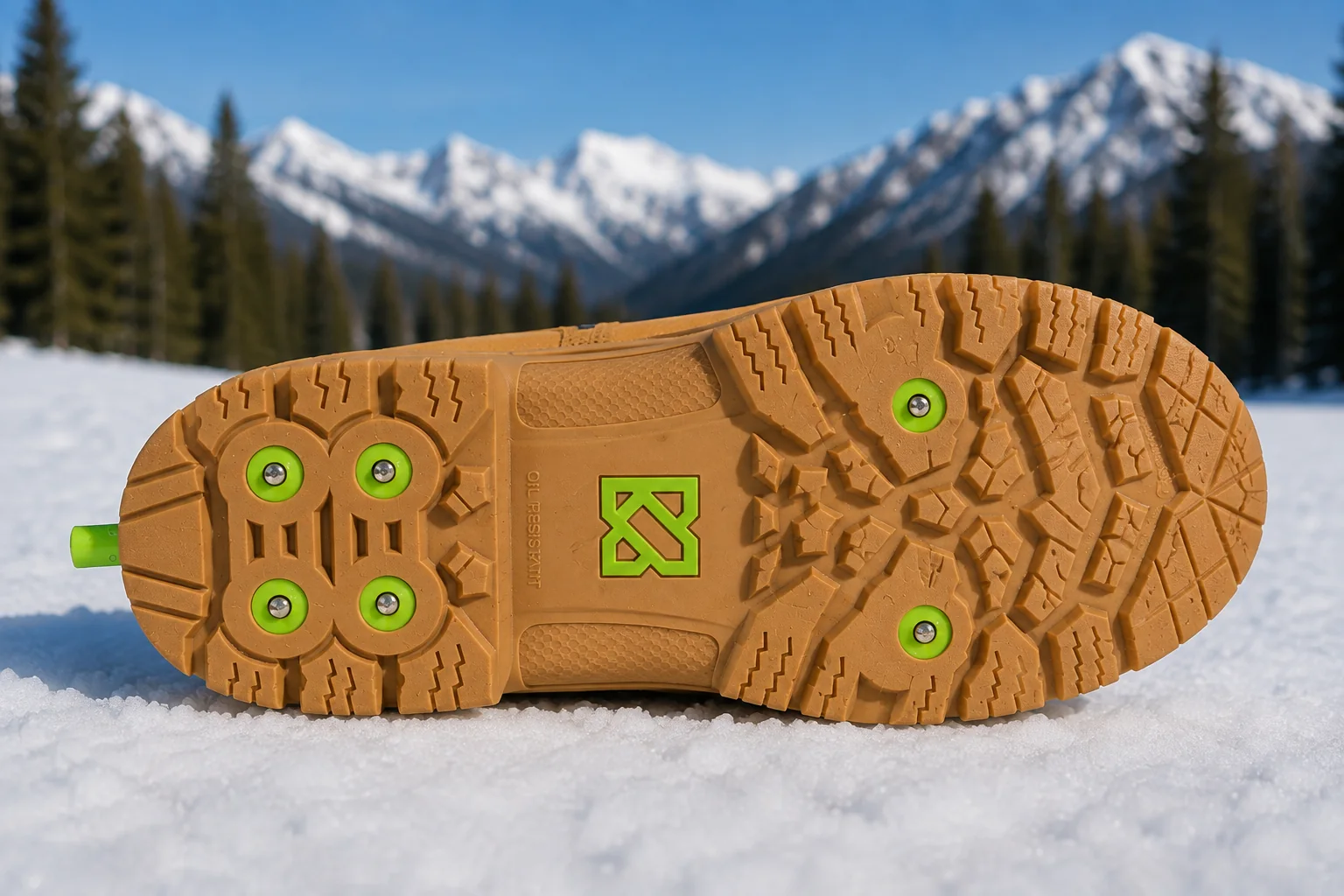
Four sit under the heel in a two-by-two group, on a slotted plate — that is where an icy step goes wrong first. Two more sit forward of the arch, in the wide part of the foot, set to the inner and outer edges where the load transfers as the stride rolls through.
The arch between the two groups carries no spikes, and neither does the toe. Wear testing over three years removed the ones under the toe: they caught on the ground for most wearers and became a trip hazard of their own. What is left is metal at the two points that actually carry a step on ice.
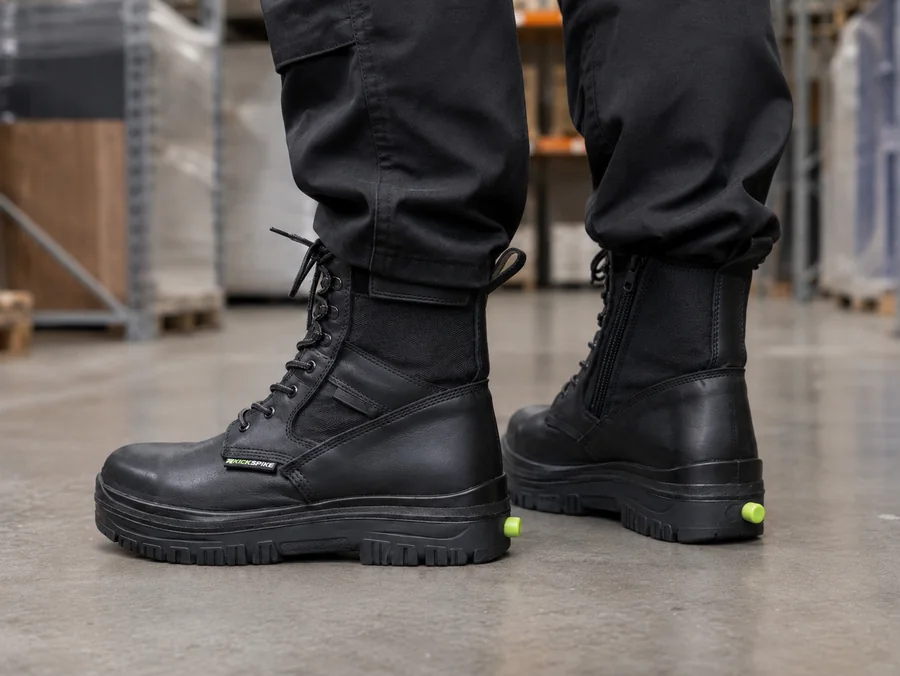
Spikes sit flush in their housings. Oil-resistant lug tread — safe on truck floors, warehouse concrete, tile and a customer's hardwood.
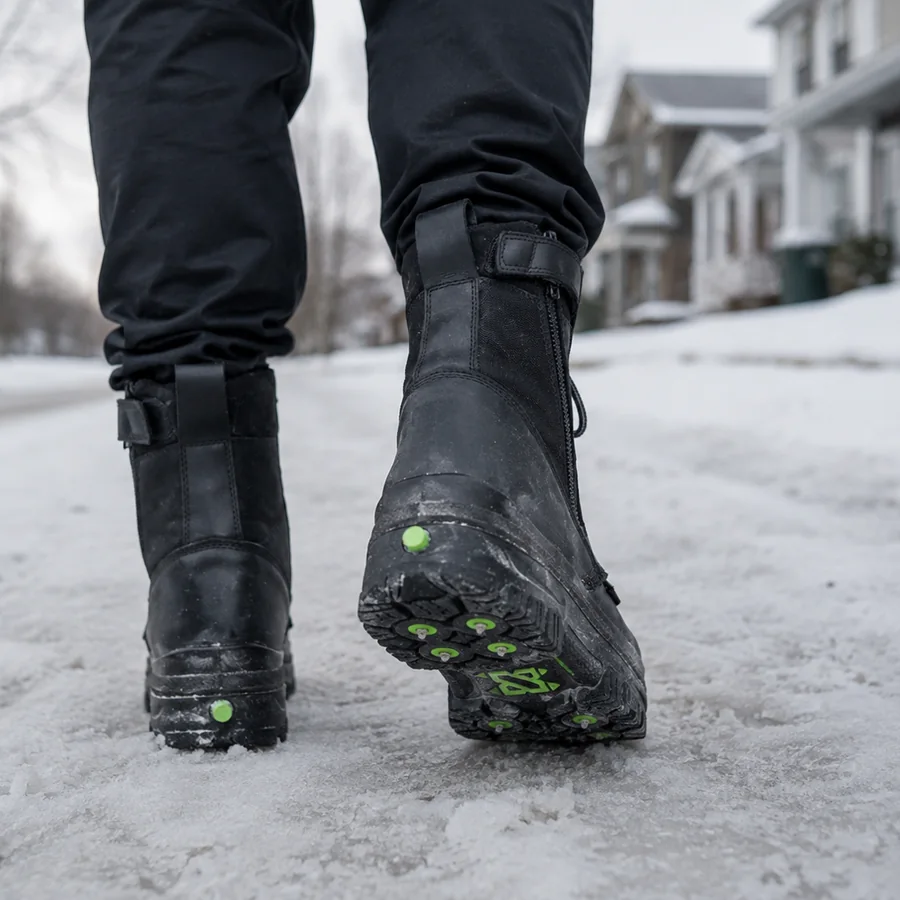
Six spikes extend below the tread and bite into ice, packed snow and frozen gravel — at the point of contact, on the first step.
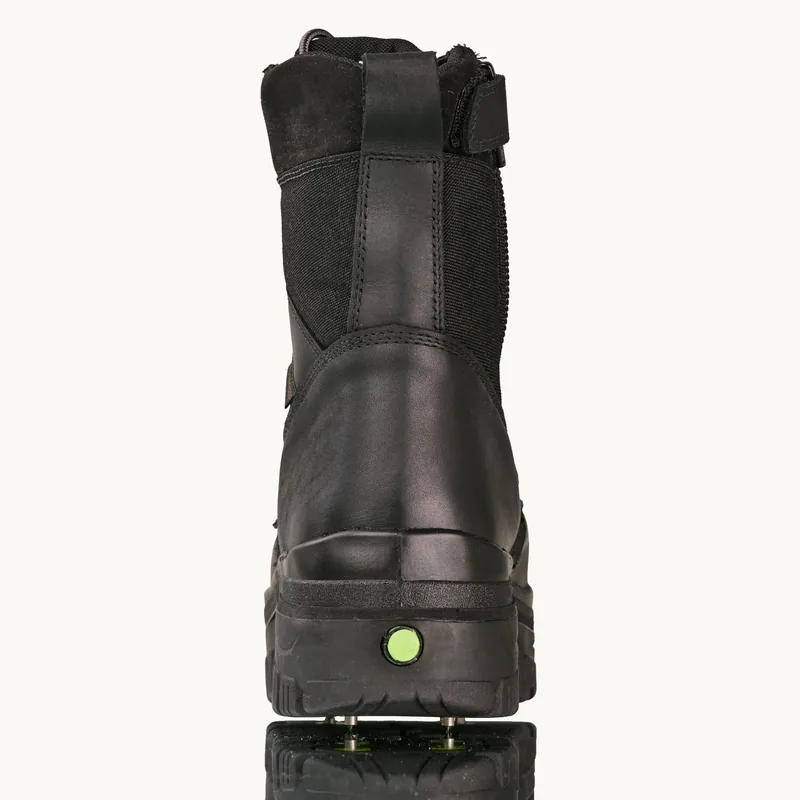
The green button on the back of the heel changes state in seconds, standing up, without touching the boot by hand. A mechanism that needed you to sit down would get skipped exactly like cleats do.
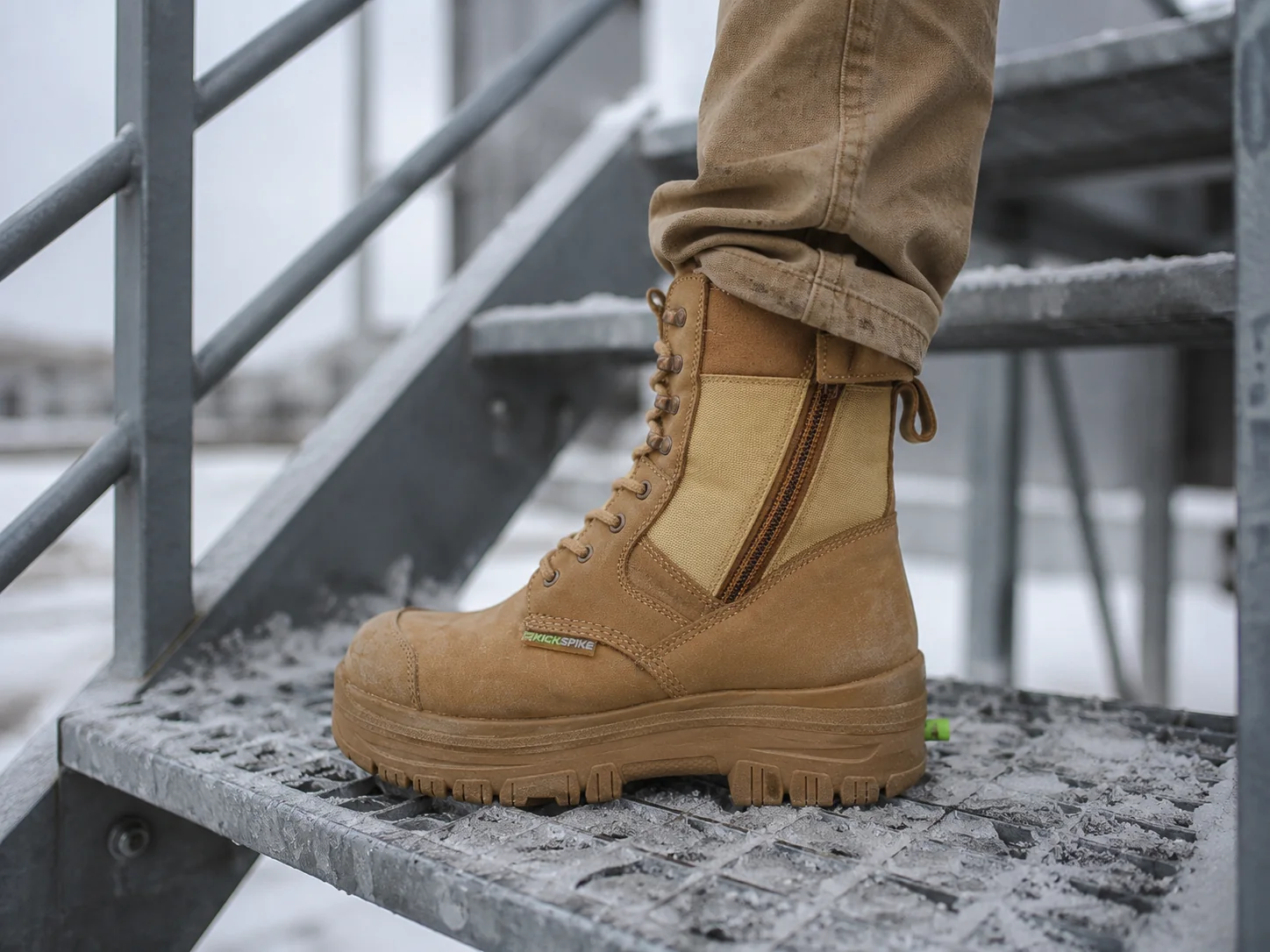
Three years of wear testing produced a set of decisions that are easier to defend than to market. We would rather show the reasoning.
Forefoot spikes tested as a trip hazard for the majority of wearers, so they were removed. Traction sits under the heel, where the slip starts.
A full-length side zip alongside the laces. On a route with dozens of stops, getting the boot on and off stops being a decision.
The ASTM safety toe is composite rather than steel: lighter, better electrical resistance when exposed, and better insulation in cold weather.
Insulation rated for prolonged cold exposure at moderate activity — which describes a winter delivery route precisely.
The heel lever is moulded from glass-filled nylon, specified for repeated actuation across a full winter of shifts.
Replacement spikes are fitted with the supplied torque wrench, not a screwdriver. They are tightened to a specification, not to feel.
Spikes wear; boots shouldn't. Both spike materials are rust-proof, and both are available as replacements so a hard season becomes a maintenance line item instead of a write-off.
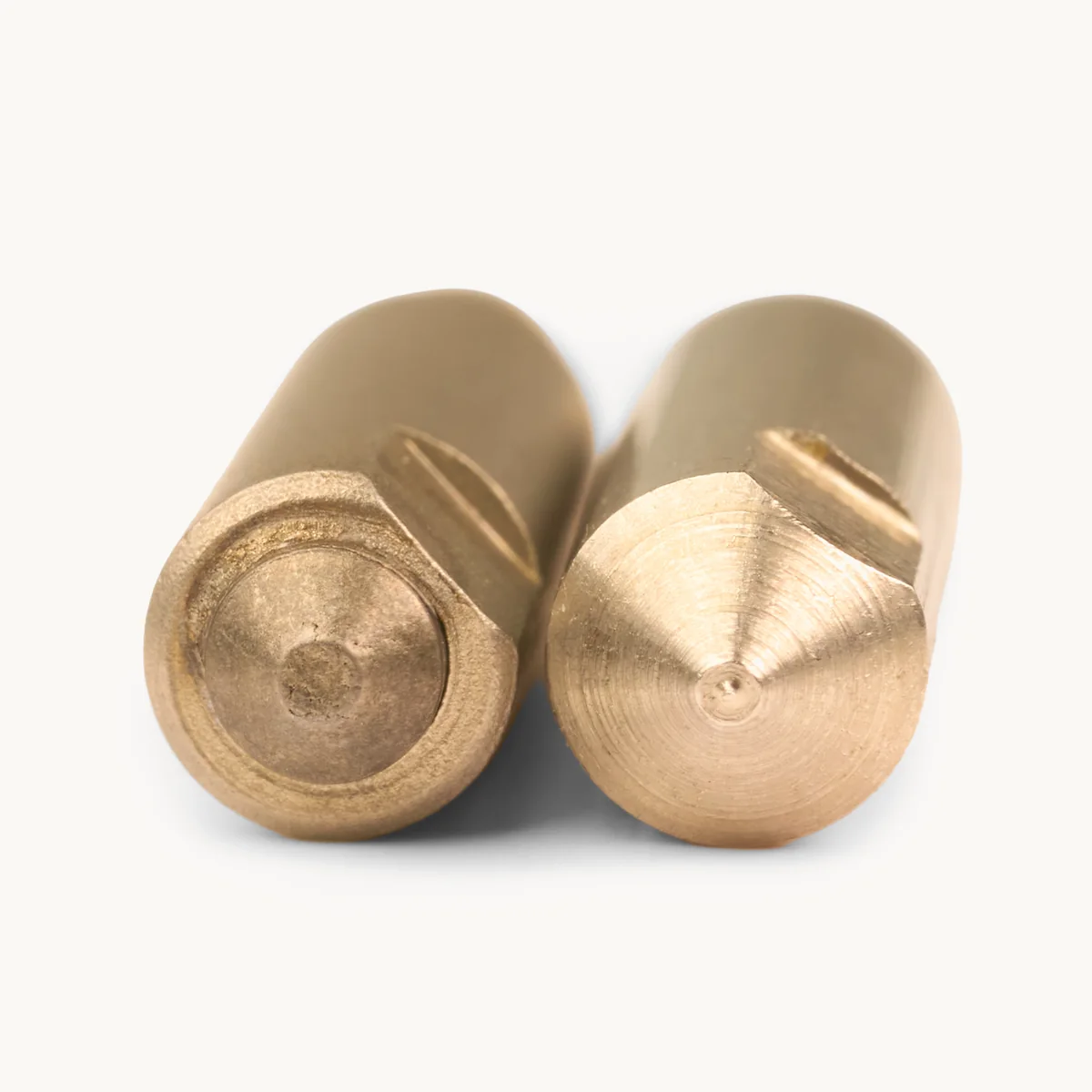
Both options thread into the same housing and are fitted with the same torque tool. Same body, same thread, same housing, same tool. The only thing that changes is the working face: a point machined from the steel itself, or a tungsten carbide insert seated into it.
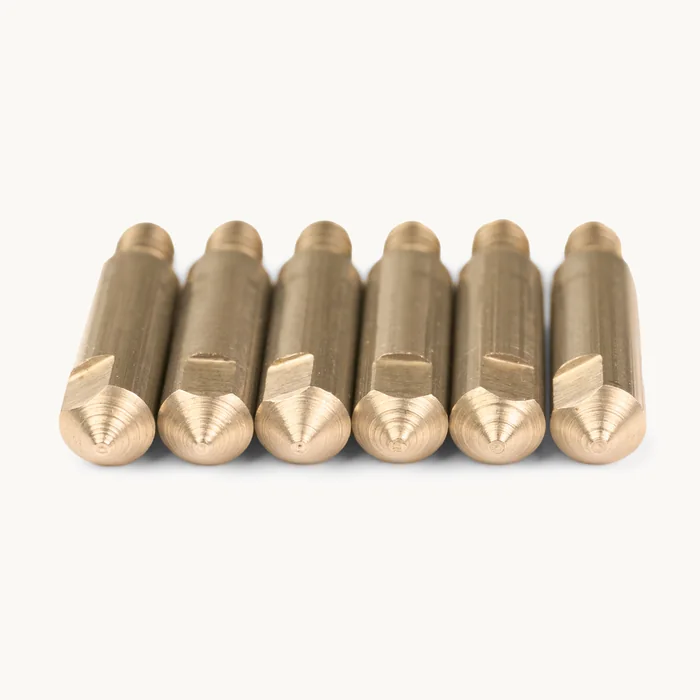
A point machined from the spike body itself, rust-proof through salt, slush and freeze-thaw. Twelve come in the box; a replacement set of 12 is $19.99.
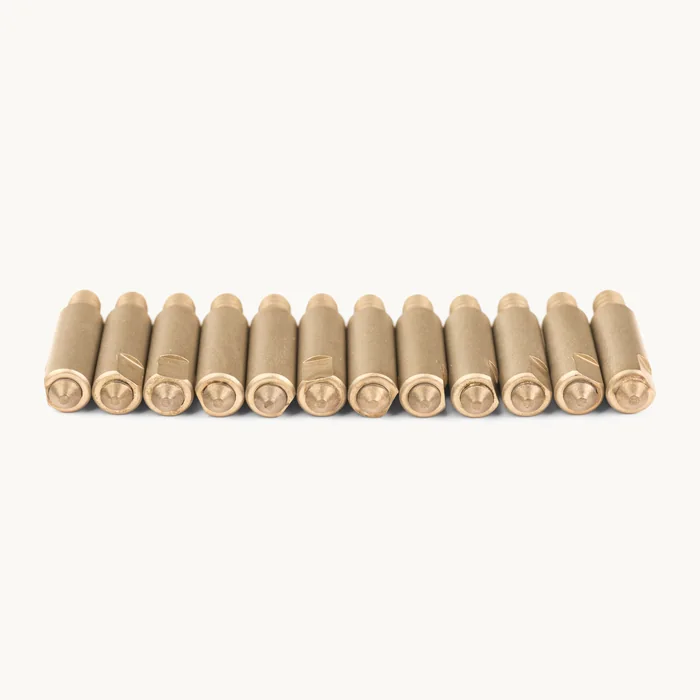
Not a different spike — the same body and the same thread, with a tungsten carbide insert seated at the contact face. Harder and non-sparking, for routes that chew through stainless before the season ends. $29.99 for 12.
Two models, two versions each. The construction is identical across all four — the only difference is the composite toe.
ASTM certification applies to the Full Safety version, which carries the composite toe. The Non-Safety version shares the same construction but is not ASTM safety rated. Certification numbers and test reports are included in the evaluation kit — request it here.
No. Spikes are 303 stainless steel or tungsten carbide tipped, and every metal in the mechanism is rust-proof.
With the torque tool that ships with the boots. It has to be used: spikes are tightened to a specification, and the tool is what guarantees it. Replacement sets of 12 are available separately.
Six in total: four grouped under the heel on a slotted plate, and two further forward in the wide part of the foot, one to the inner edge and one to the outer. The arch and the toe carry no spikes.
Three years of wear testing showed that spikes at the toe caught on the ground for the majority of wearers and became a trip factor. They were removed, and the traction that matters — heel and the wide part of the foot — was kept.
One year from the date of purchase.
The Full Safety version is ASTM rated, with a composite toe. The Non-Safety version is the same boot without that toe, so it is not safety rated. Check what your workplace requires before ordering.
No, and deliberately. The safety toe is ASTM composite, which is lighter than steel, offers better electrical resistance when exposed, and insulates better in cold conditions.
It is moulded from 20% glass-filled nylon, an engineering plastic specified for repeated actuation through a full season of shifts.
Deployed spikes reduce stability on hard surfaces and are not recommended there — the same is true of any traction device. Retract them before walking on concrete, steel decking or indoor floors.
No. The spikes are the consumable part and are replaced individually.