
You know the exposure window before it opens, you know which hubs sit inside it, and you know slips will come. The one variable you control is what is on the driver's feet — and whether they will actually use it.
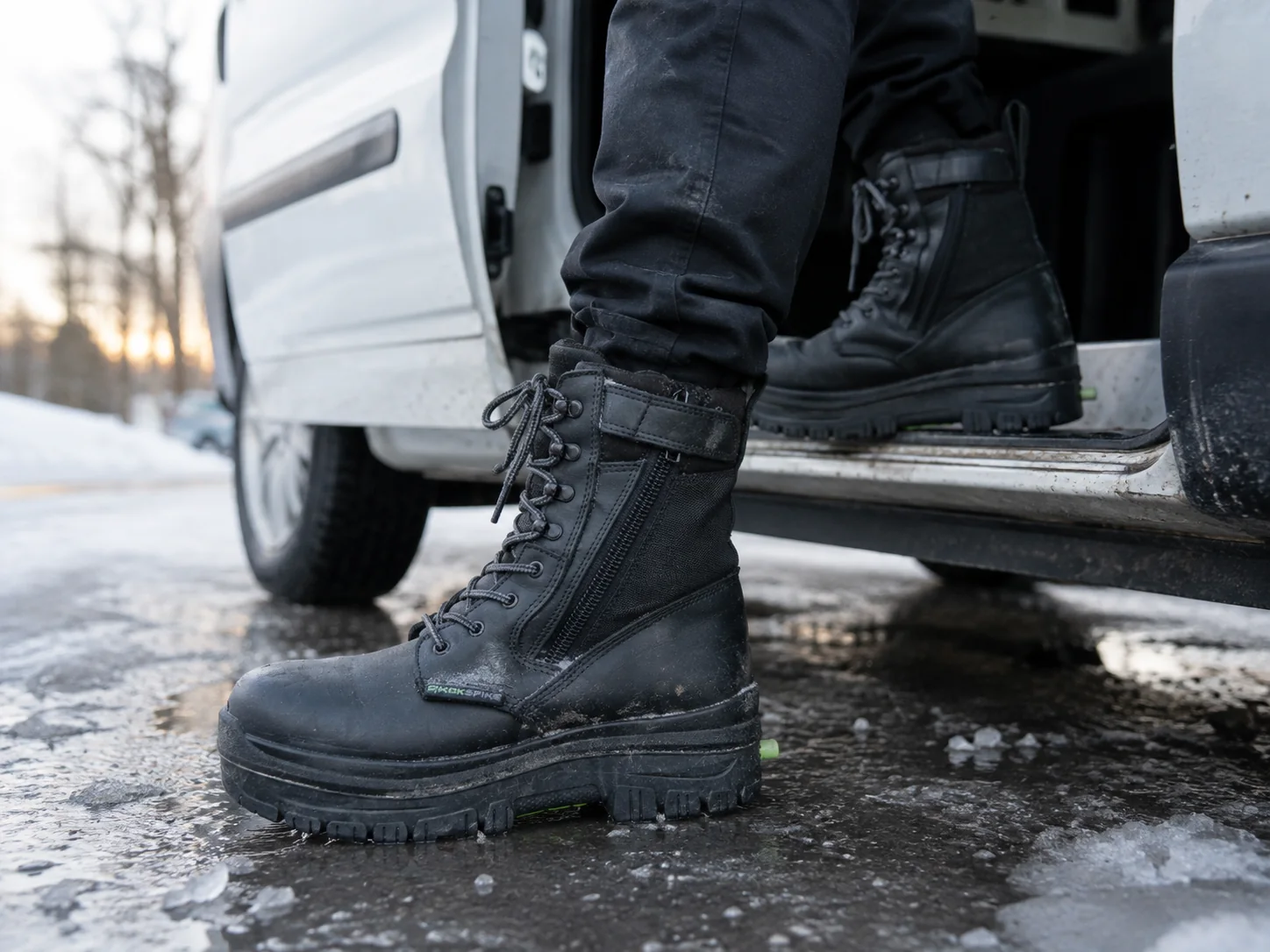
Between the cab and the door there is a step onto ground nobody has treated yet. Repeat it two hundred times a day, through four months, across every hub in a cold-weather market.
Frontline drivers cover thousands of walking miles across snow- and ice-covered surfaces each winter season.
Slips and falls remain one of the most common sources of lost-time workplace injury nationwide.
Fall and slip claims sit among the highest average lost-time claim costs of any injury category.
Slower routes, extra caution and missed stops erode throughput in exactly the weeks volume peaks.
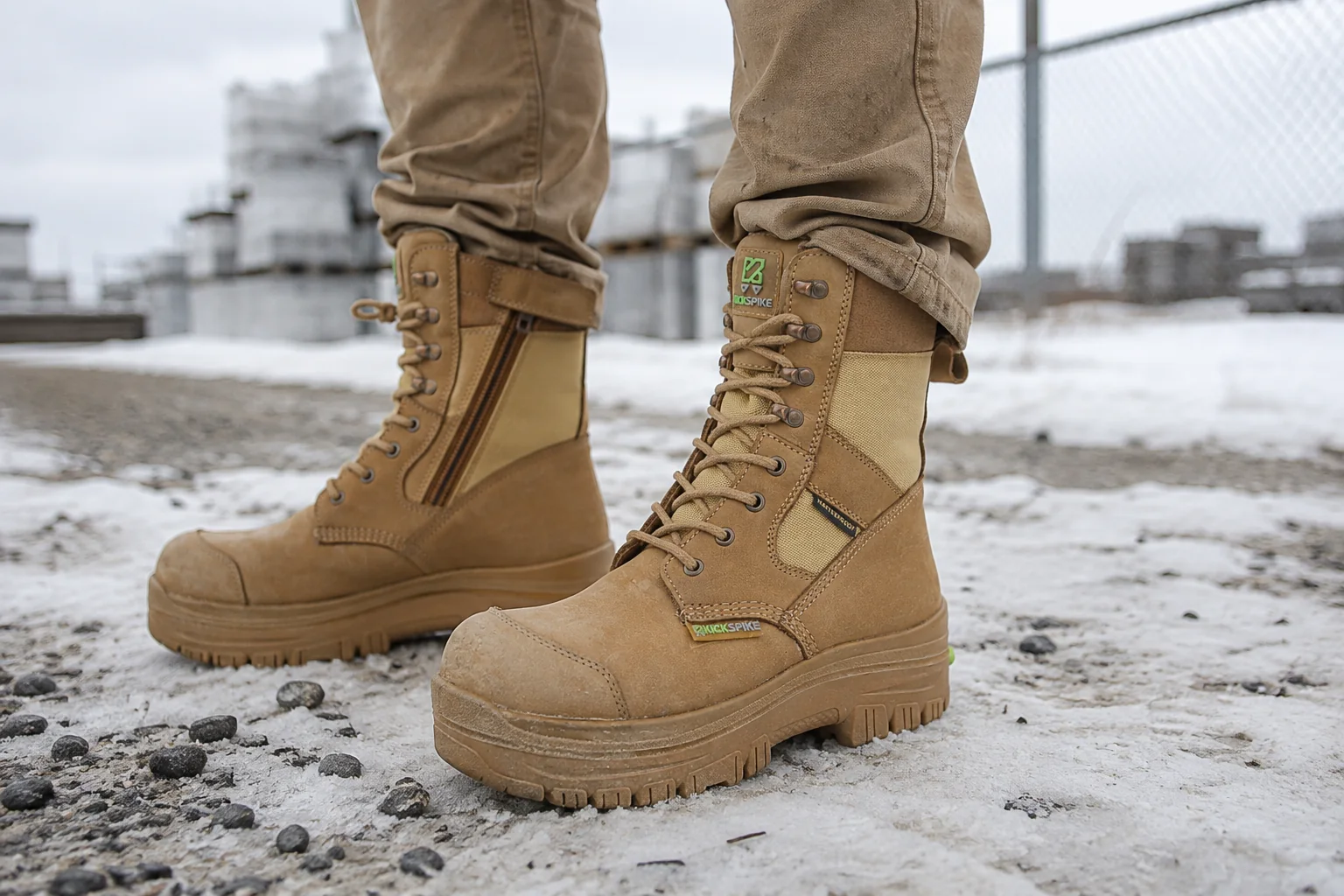
Claim costs and injury frequency vary by carrier, region and year, so we don't publish an industry average here. The cost model runs on your own figures instead.
The equipment is fine. The moment of use is the failure point — and it repeats two hundred times a shift.
We are not asking for a rollout decision. We are asking for one hub, one winter, and a baseline to measure against.
Equip the frontline crew at one hub in a market with heavy seasonal ice and snow exposure, for a full winter season.
Track slip-related incident reports, lost-time days and driver feedback against the prior-year baseline for that same hub.
Evaluate results together against the cost model before any broader rollout is discussed.
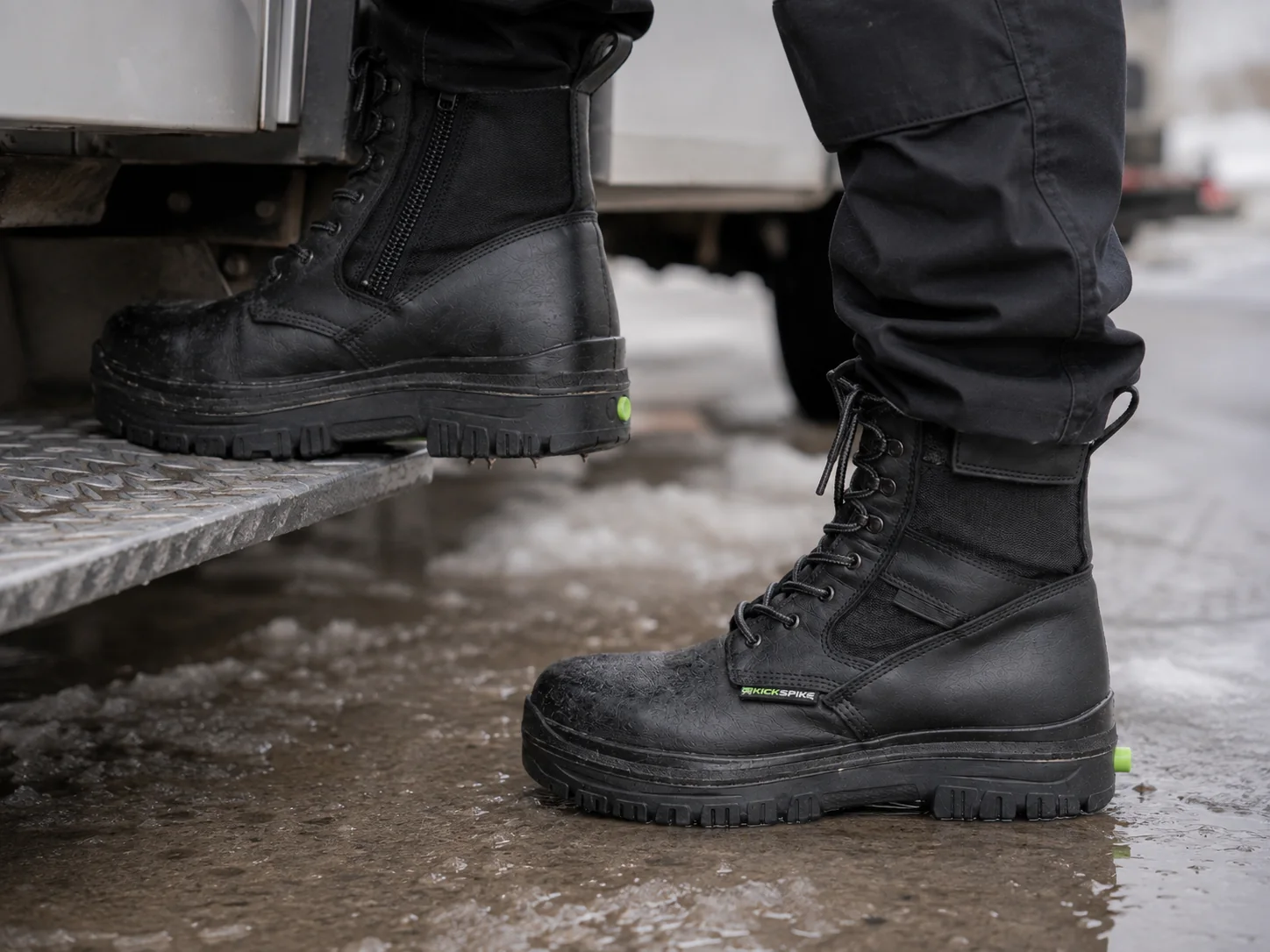
We sell directly to individual workers as well as to operations — no distributors on either side. Drivers who buy their own are usually the ones who bring Kickspike to their safety lead, which means the fastest evaluation you can run may already be underway inside your own workforce.