A waterproof work boot with patented metal spikes built into the outsole. They drop when the walk is iced over and pull back before the driver steps into the truck. Nothing to strap on. Nothing to leave in the cab.
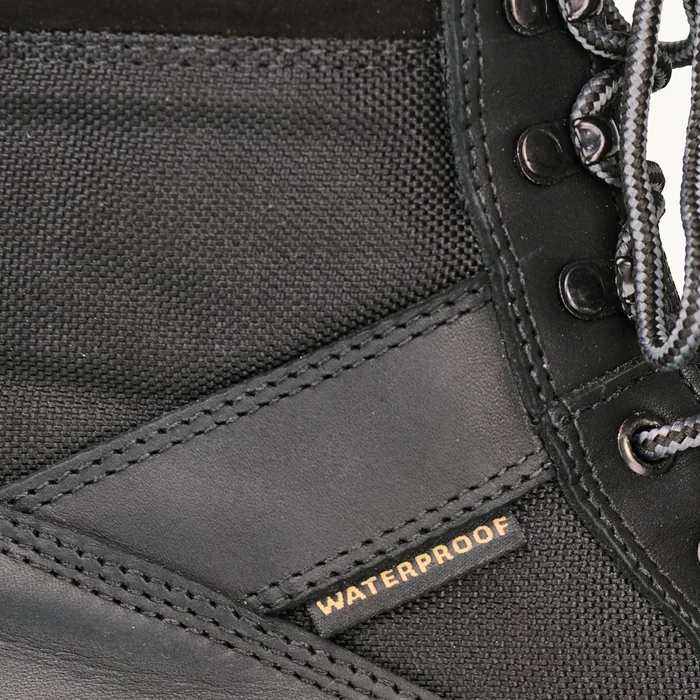
FORCE 1 — black full-grain waterproof leather. Full Safety with ASTM composite toe, or Non-Safety without it.
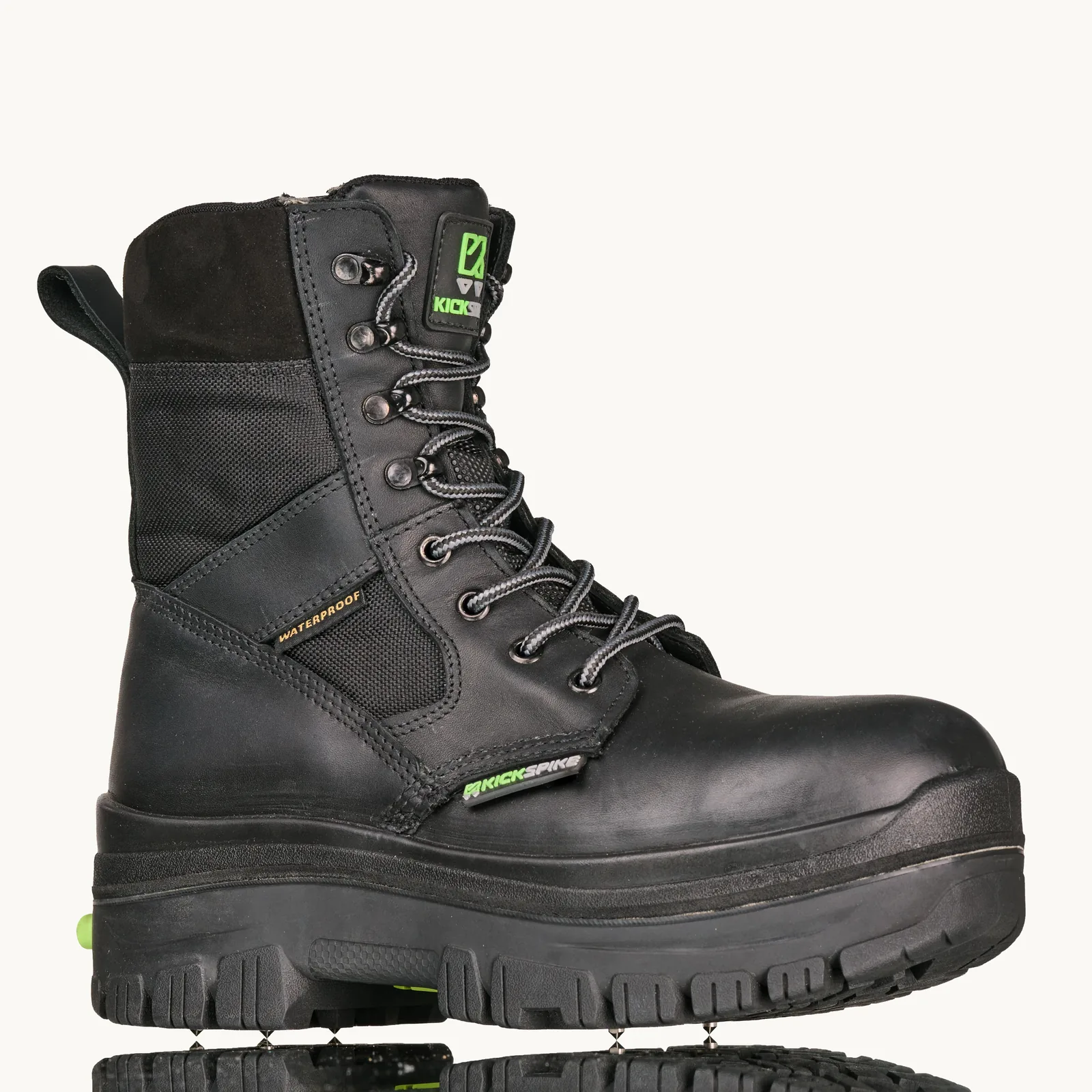
A slip starts at the moment of contact — heel first, before the weight has settled. That is the instant the spikes are for: already deployed, already under the foot, without anyone having stopped to strap something on.
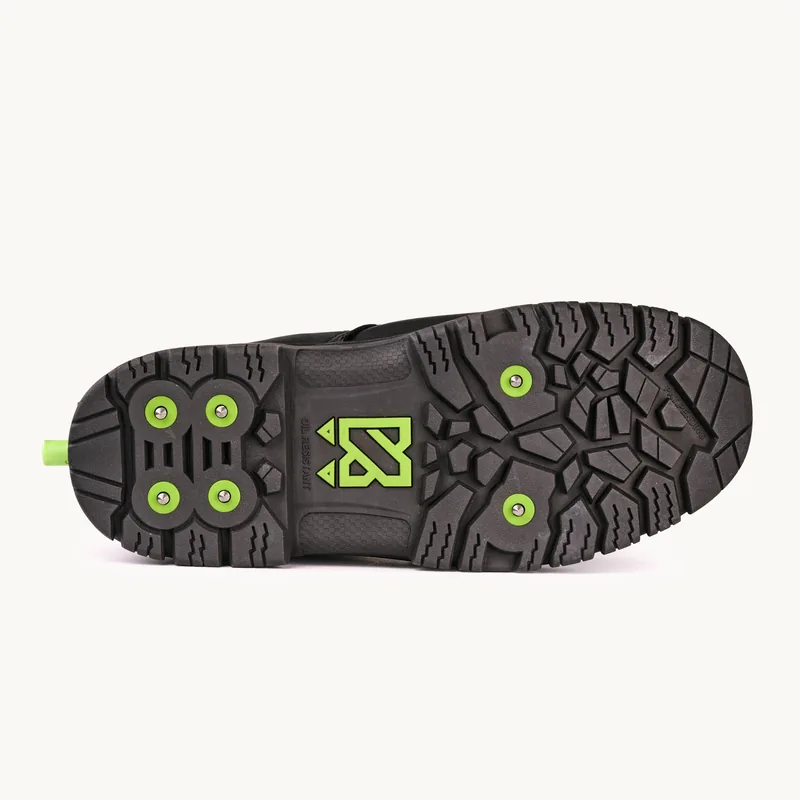
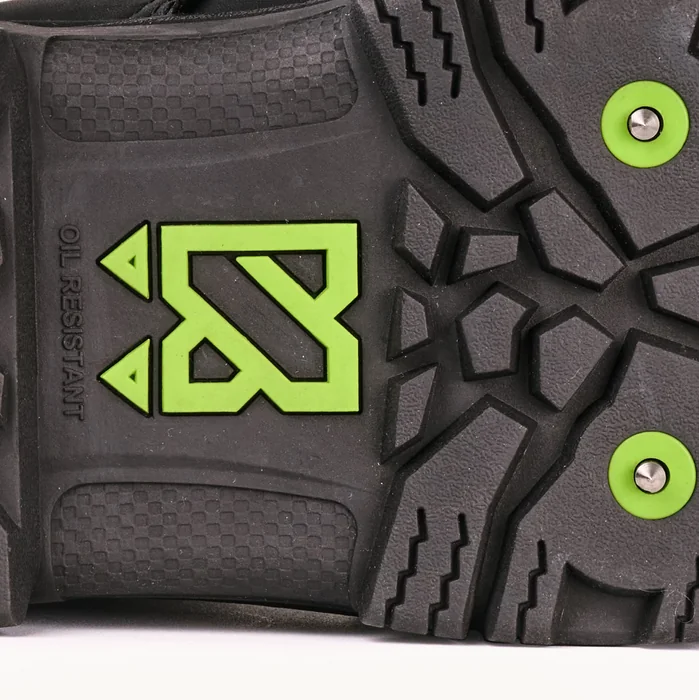
A kick of the heel lever moves six spikes through the outsole and back. Deployed, hardened metal bites into ice and packed snow. Retracted, it is a flat oil-resistant work outsole — truck floor, warehouse concrete, a customer's hardwood.
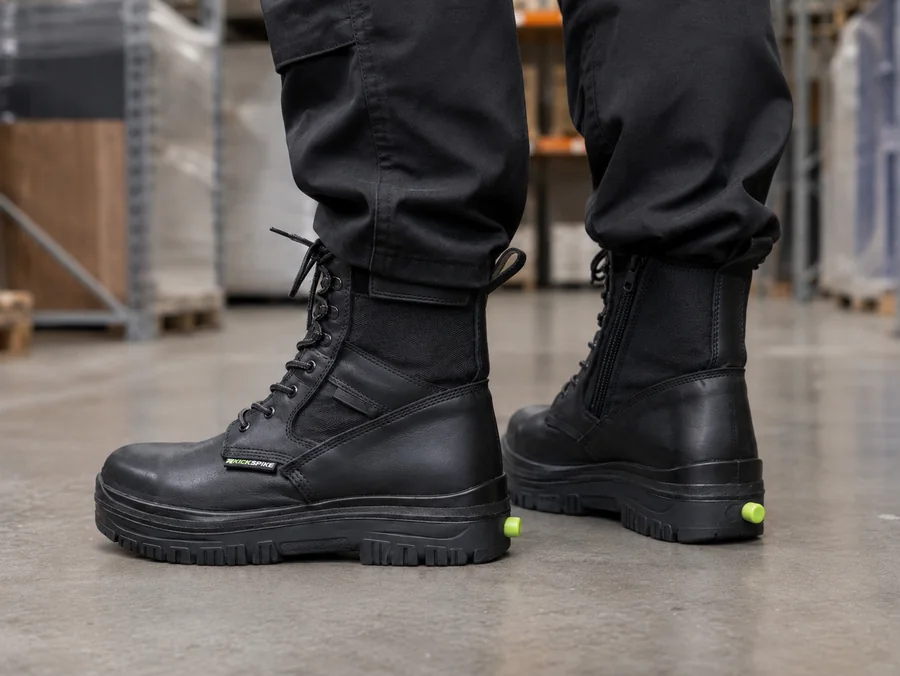
Spikes sit flush in their housings. Oil-resistant lug tread, safe on hard indoor surfaces, no noise and no floor damage.
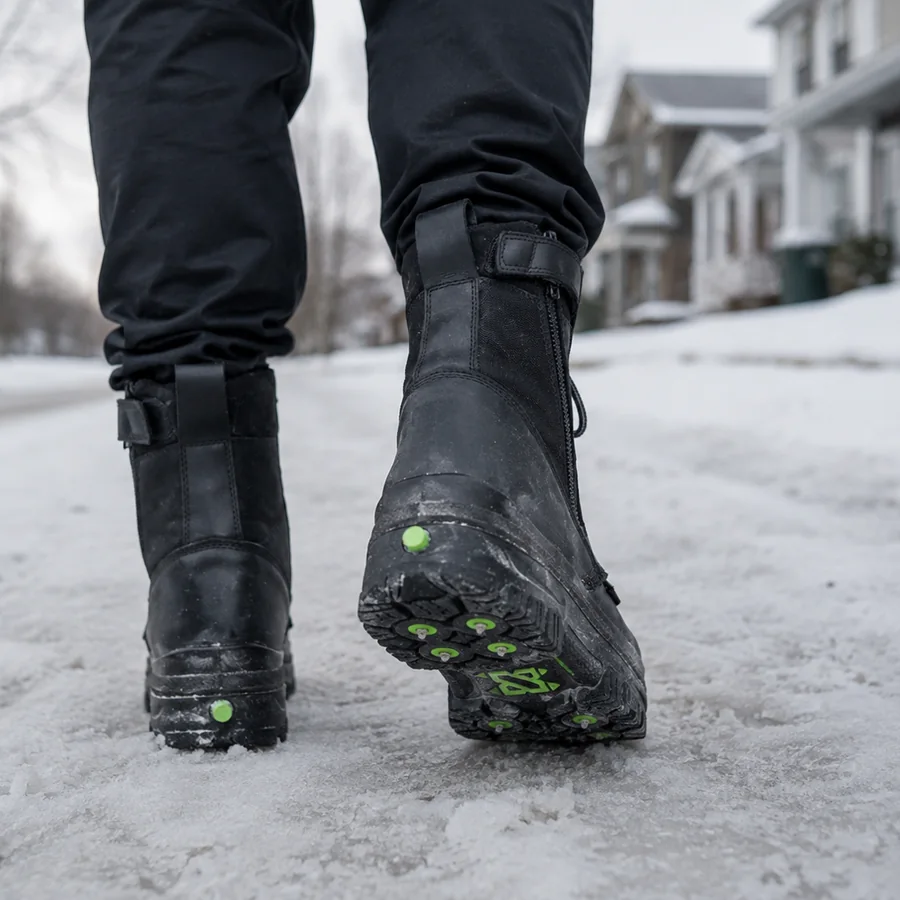
Spikes extend below the tread and bite into ice, packed snow and frozen gravel — at the point of contact, on the first step.
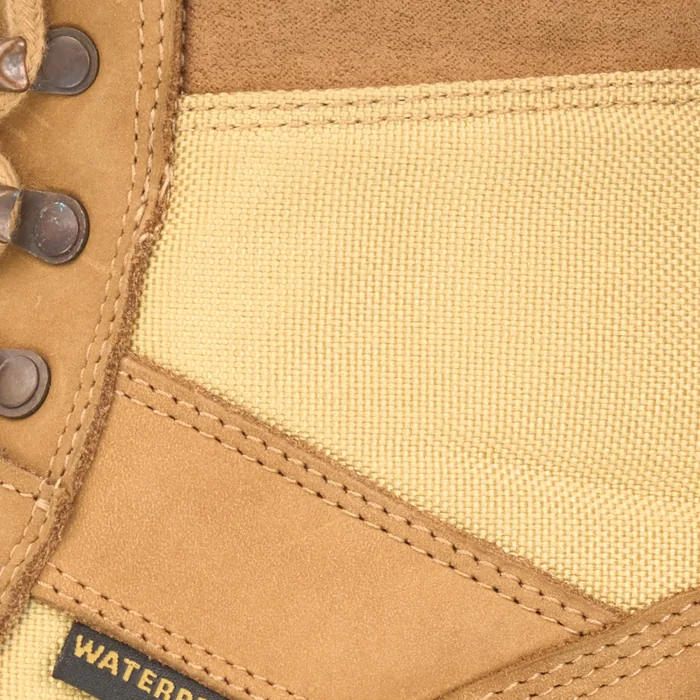
Black is the configuration that goes out on most routes. Same construction in Coyote, same traction system, same 400 g of insulation.
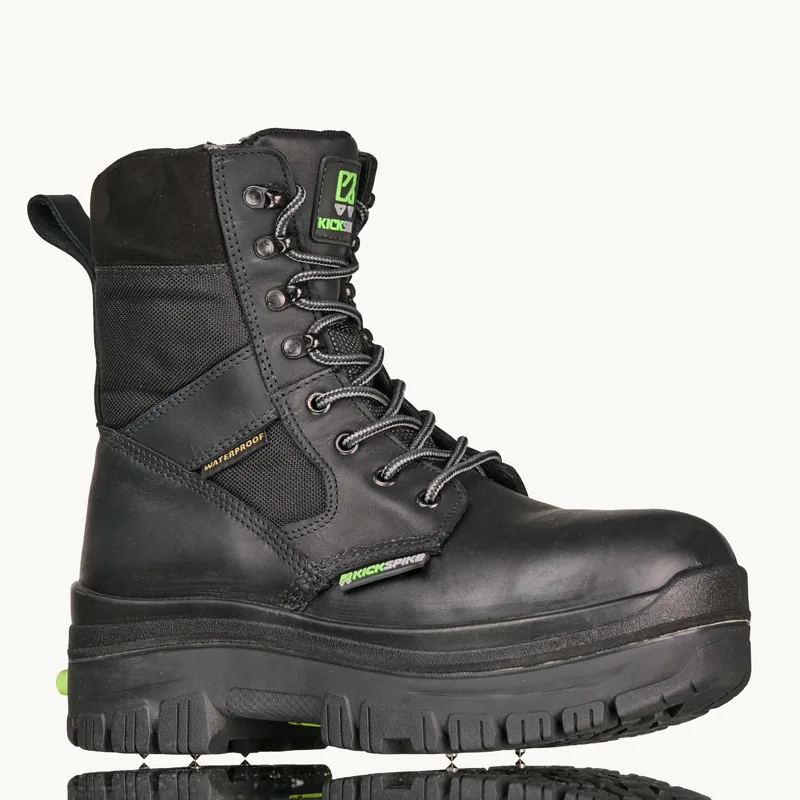
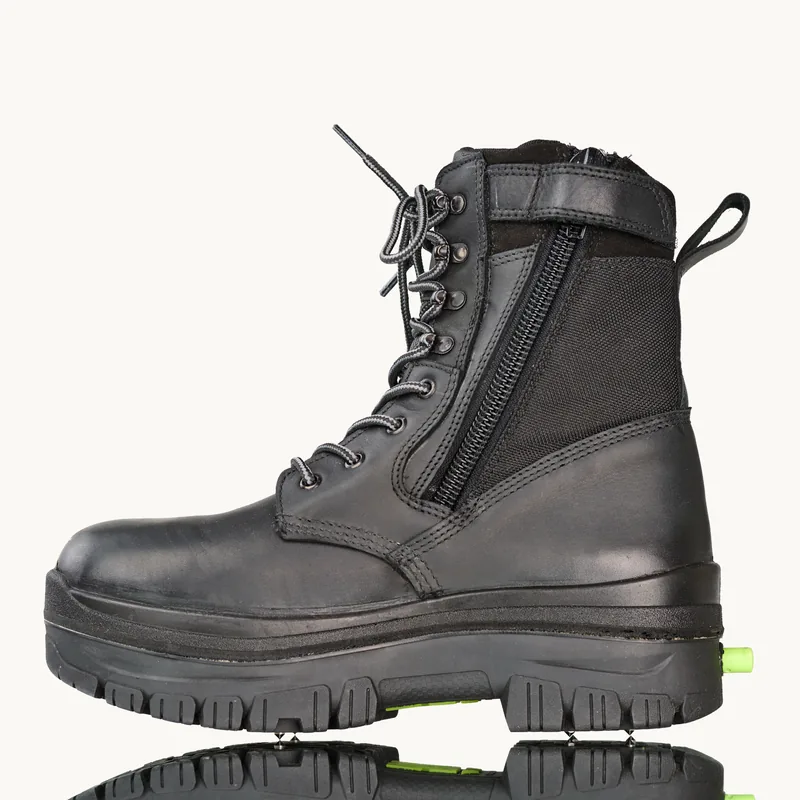
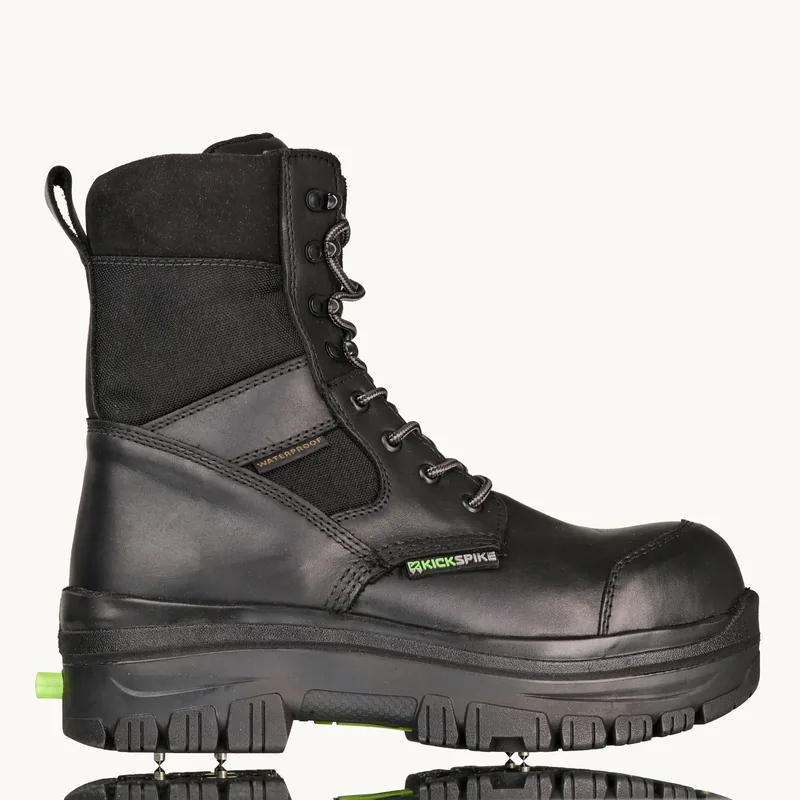
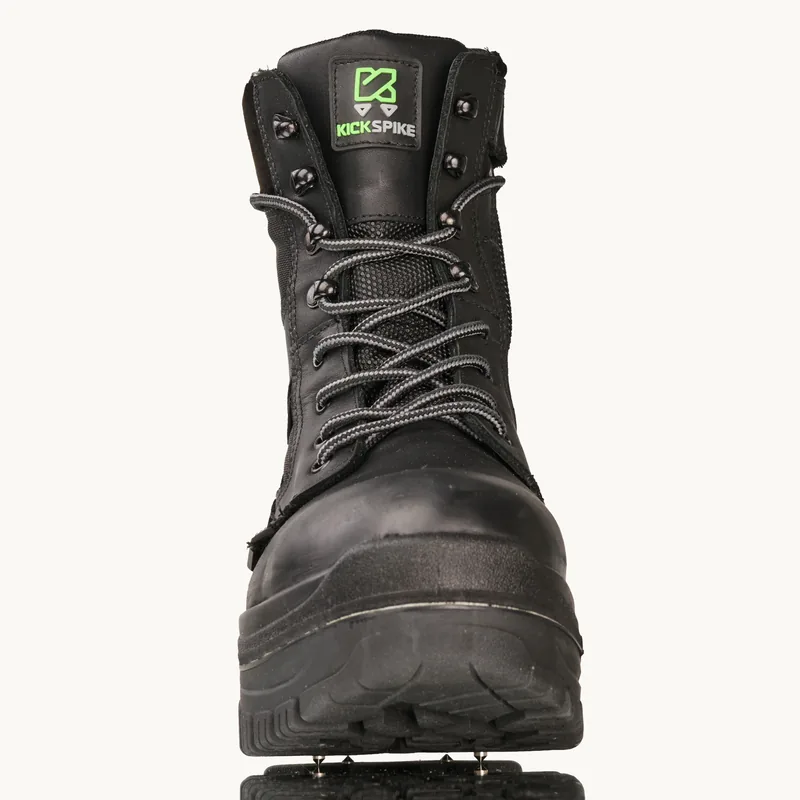
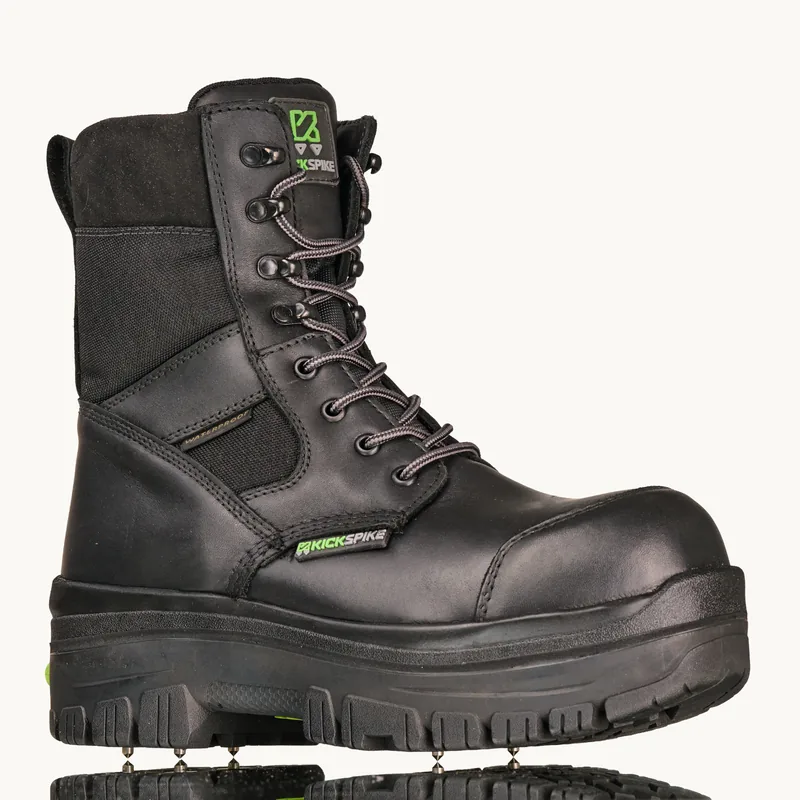
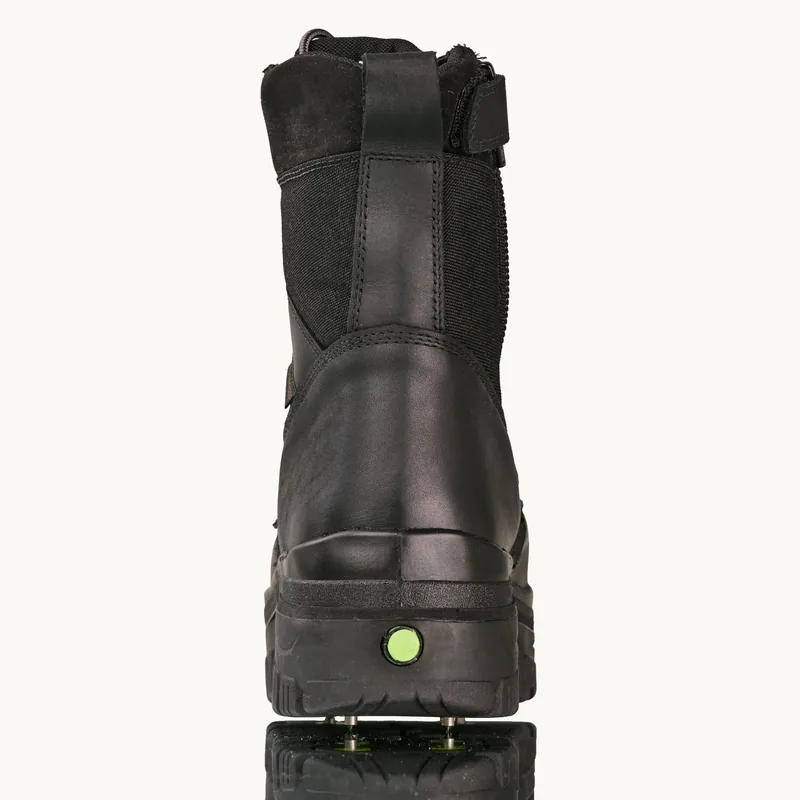
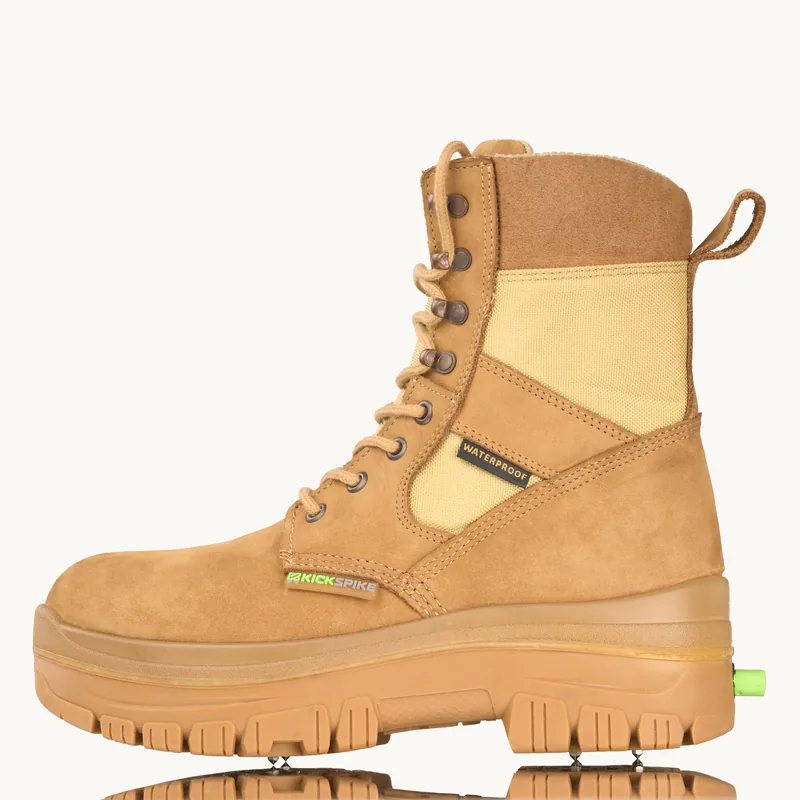
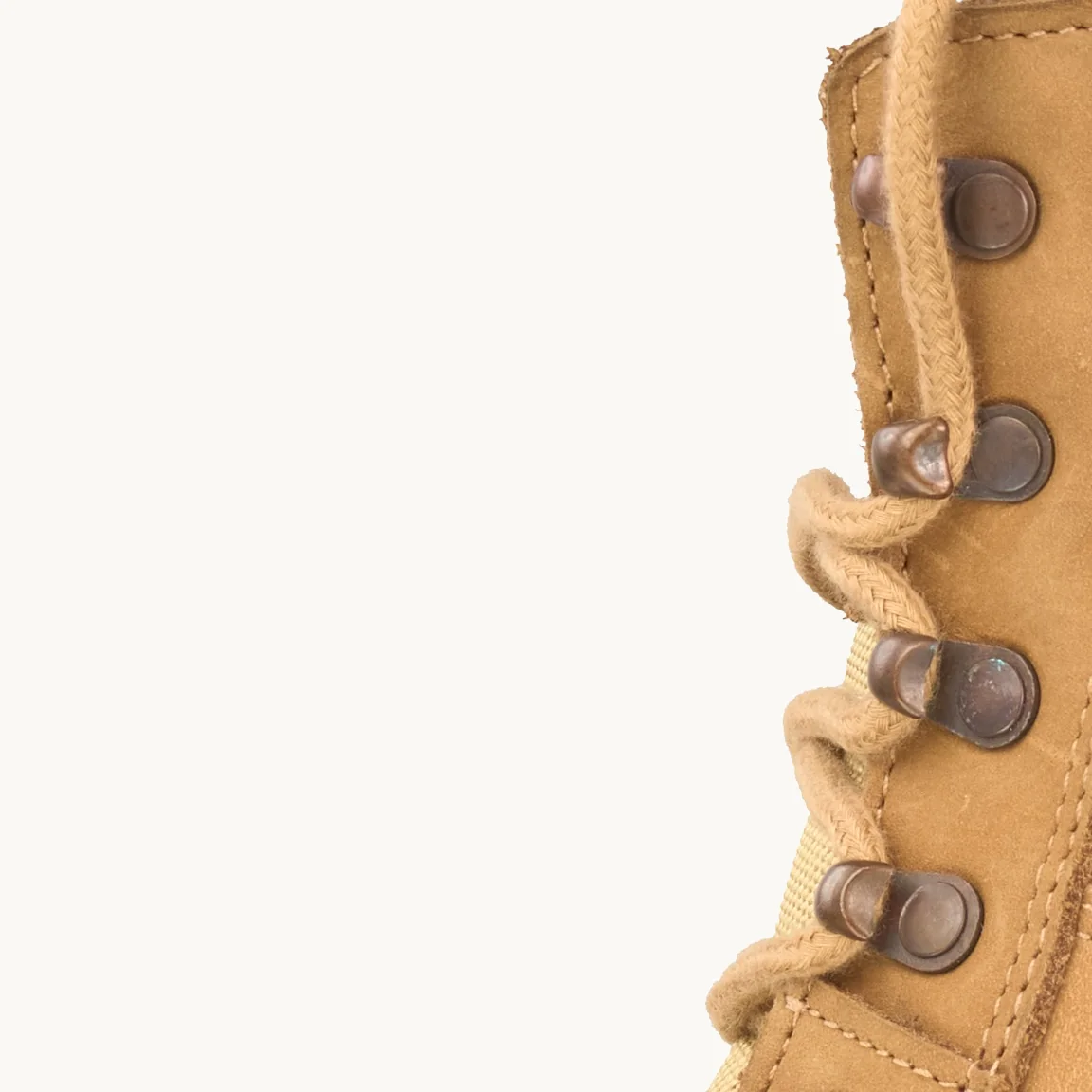
Before any of this is a traction system it has to be a boot someone will put on at five in the morning, every morning, from November to March. Waterproof leather upper, 400 g of insulation, and a lug outsole that has to survive a season of salt and grit.
The spikes are what makes it different. The boot is what makes it wearable.
Every outdoor operation already issues overshoe cleats. The equipment works. The behaviour around it doesn't — and a cleat in a jacket pocket has never prevented a fall.
Toe spikes tested as a trip hazard for the majority of wearers, so they were removed. Four spikes sit under the heel and two in the wide part of the foot — the two points that carry a step on ice.
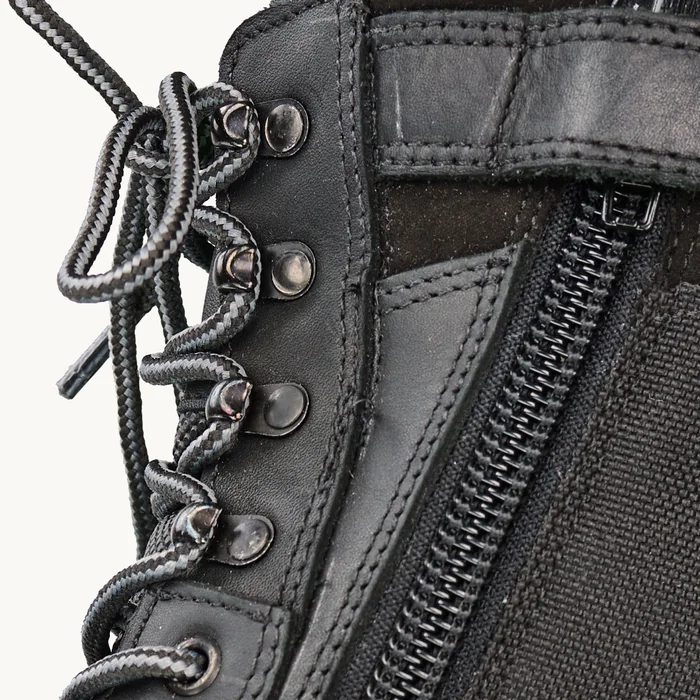
A full-length side zip alongside the laces. On a route with dozens of stops, getting the boot on and off stops being a decision.
ASTM composite safety toe instead of steel: lighter, better electrical resistance when exposed, and better insulation in cold weather.
Spikes come in 304 stainless or tungsten carbide tipped — both rust-proof. They are consumable and swapped with the torque tool, so the boot is not written off.
The heel lever is moulded from glass-filled nylon, specified for repeated actuation through a full winter of shifts.
Insulation rated for prolonged cold exposure at moderate activity — which describes a winter delivery route precisely.
A delivery driver crosses between traction surfaces every few minutes, all winter. That is the whole design problem — and the reason equipment you take on and off was never going to hold up.
Equip the frontline crew at a single high-exposure location for a full season. Track slip-related incident reports and lost-time days against that same hub's prior winter. Review the results together before anyone commits to a rollout.
Individual pairs are sold out while the next run is built. Leave us your email and we'll tell you the day they're back — and if your employer might equip the whole crew, that route is open now.
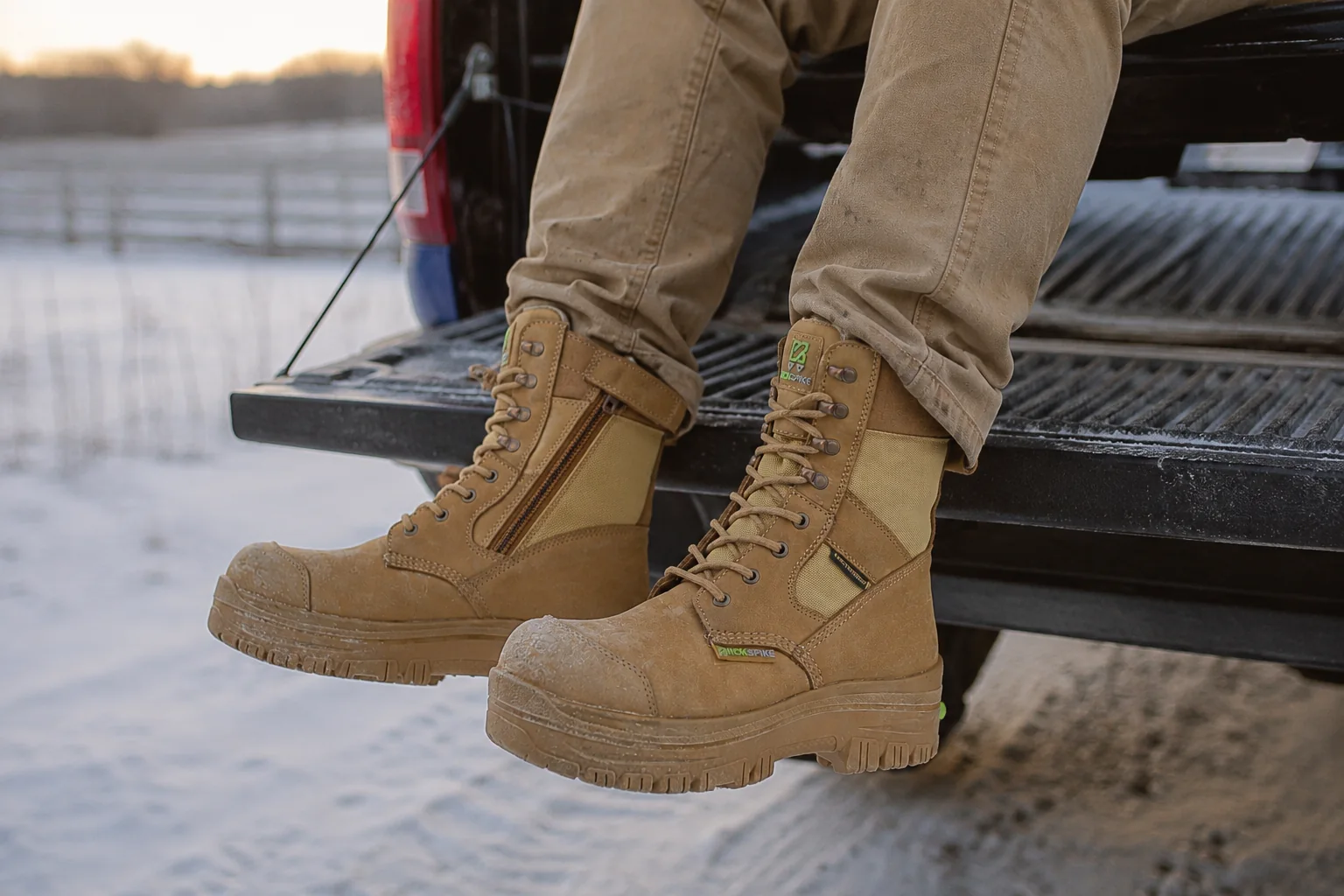
400 g of insulation, a waterproof leather upper, and a side zip that gets it on and off between stops. The traction system is the reason to buy it. The boot is the reason it stays on.
While the GEN 3 is in production, the REBEL I and REBEL II are in stock and shipping now — $379, with the same retractable spike system and the same ASTM-certified composite toe.
Equipping a hub for a full season means collecting size runs, building and shipping before the first freeze. Conversations that start after summer land the following year.